
Upscale your upgrades.
Systems Integration
Assessments
This initial phase involves understanding your goals, budget, and timeline. It includes a site survey to evaluate the space's acoustics, layout, and existing infrastructure, ensuring the project's feasibility and scope are defined
Deployments
Once tested and approved, the system is formally handed over to you and made operational for daily use. This phase often includes final documentation and may involve a soft launch or initial use under supervision.
Designs
Based on the planning data, a detailed technical design is created. This includes selecting specific equipment (speakers, amplifiers, mixers) and creating a system layout with precise speaker placement, cable runs, and signal flow diagrams to achieve optimal sound coverage and quality.
Trainings
The your staff members are trained on how to operate the system, make basic adjustments, and perform routine checks and maintenance. This ensures the system is used correctly and its capabilities are fully utilized.
Testing & Commissioning
After installation, the system is powered on and configured. This involves setting up the mixer, programming control systems, and conducting rigorous testing. The system is tuned using measurement tools to calibrate levels, EQ, and delay, ensuring clear sound and eliminating issues like feedback across the entire space.
Installations
This is the physical execution of the design. Technicians mount speakers and equipment racks, run and terminate power and audio cables, and connect all hardware components according to the design plan, ensuring a secure and safe setup.
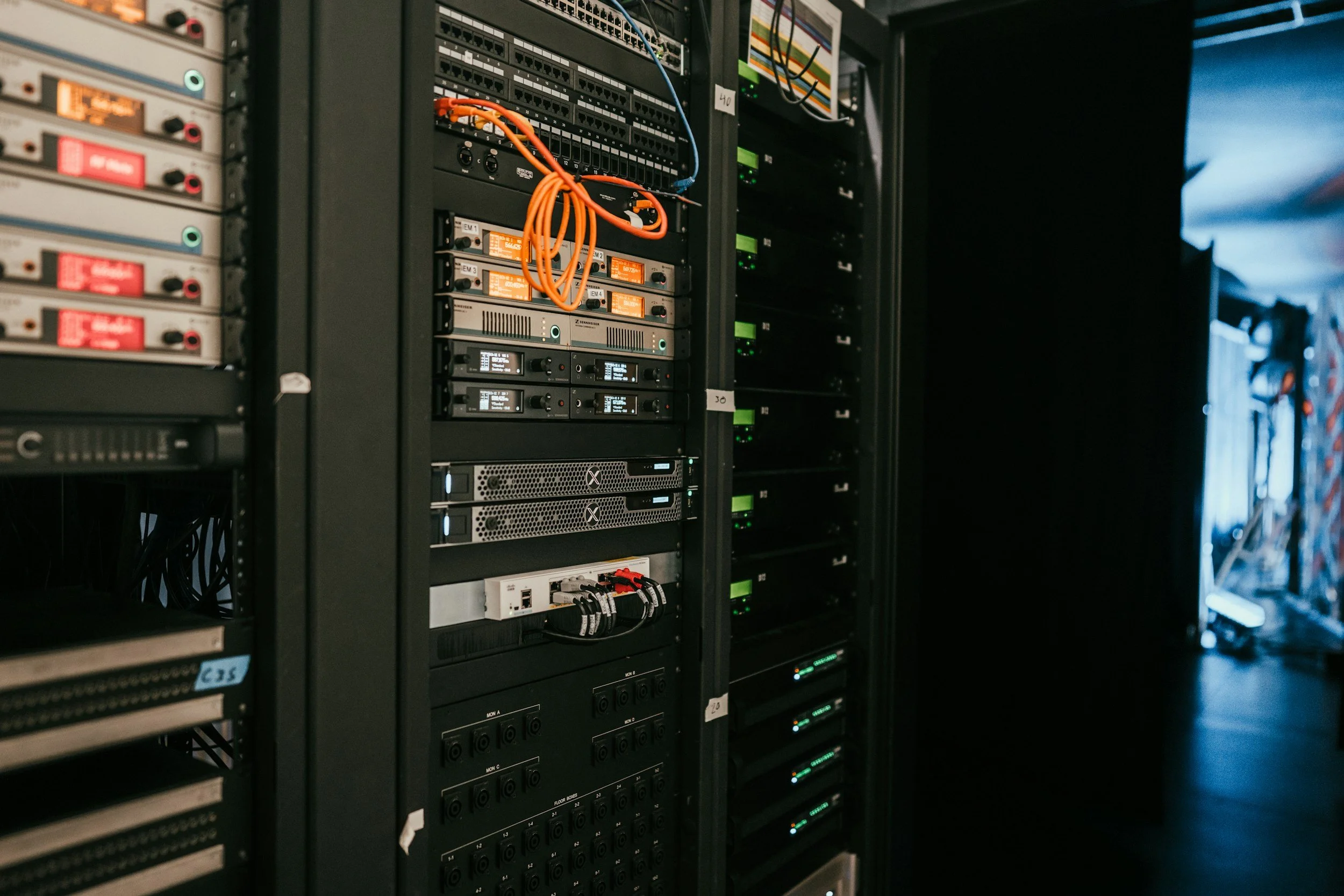
At times a full system redesign and deployment isn’t actually necessary, and a preconfigured rig is a better solution.
Learn about our RIGS here.
Acoustic Treatment
PA Listening & Placement
Positioning the speakers and the listener correctly [typically in an equilateral triangle and at a specific ratio (like 38%) along the room's length] before any physical treatment is added.
EF Treatment
Installing broadband absorptive panels at the first points where sound reflects from the speakers to the listener.
Low Frequency Control
Controlling low-frequency energy and standing waves, which are most problematic in corners. Installing thick bass traps in trihedral (three-wall) and dihedral (two-wall) corners
Installation
This is the physical execution of the design. Technicians mount speakers and equipment racks, run and terminate power and audio cables, and connect all hardware components according to the design plan, ensuring a secure and safe setup.